Short History by Daly
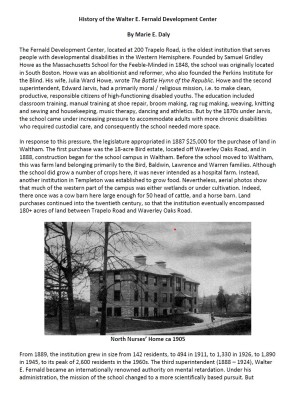
History of the Walter E. Fernald Development Center, by Marie E. Daly. PDF, 4 pages.
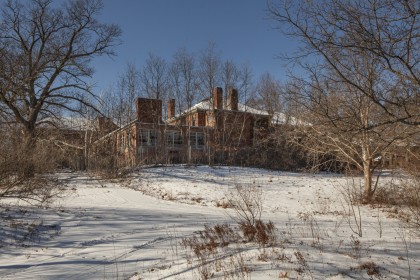
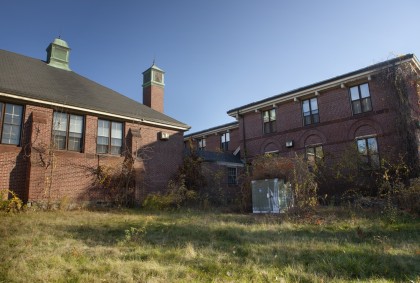
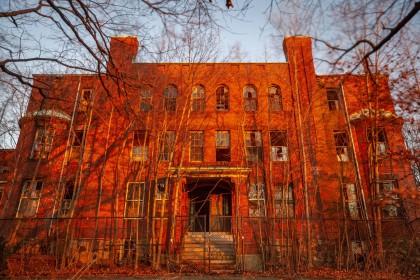
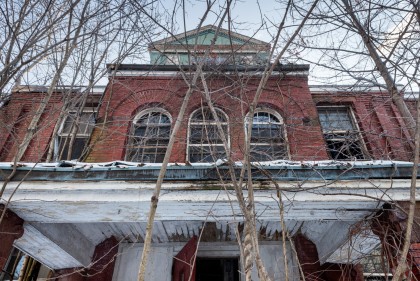
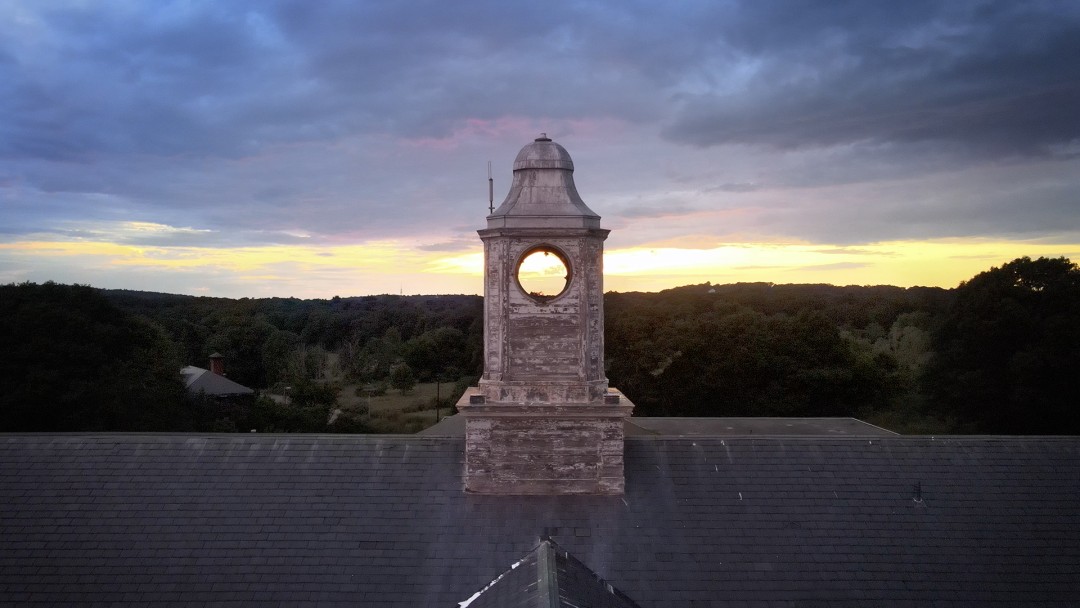
The vacant and deteriorating Walter E. Fernald State School is a massive institutional complex in Waltham, Massachusetts. Founded in South Boston in 1848 as the Massachusetts School for Idiotic & Feeble-Minded Youth, it was the first school for intellectually and developmentally disabled children in the United States. In 1890, it opened a site in Waltham under the direction of Dr. Walter E. Fernald, and grew to become a “total” institution, in which thousands of disabled people lived and died. In the decades before it closed, it was a major site in the fight for deinstitutionalization, disability civil rights, and the beginnings of the self-advocacy movement.
The Fernald School's history is filled with groundbreaking discoveries and treatments that helped shaped therapeutic, educational, and medical practices all over the world. These advances were tarnished by horrific human rights abuses, including eugenics-based practices, sexual abuse, and Cold War-era radiation experiments. Running through its history is the loneliness of generations of disabled people excluded from a world that would not accept them and their families.
This website presents a years-long documentation of the center in the hope of raising awareness of its legacy, amplifying the need to hear the stories of those who lived and died here, and offering creative interpretations of the institution's remnants to stimulate further reflection and contemplation. Originally commissioned by the City of Waltham to photographically document the buildings, the recordation team has expanded this project into a comprehensive website to shed light on a place hidden from the public view.
Recent documents, reports, and archival materials from the Fernald recordation archive. Explore highlighted items below or open the full collections index.
History of the Walter E. Fernald Development Center, by Marie E. Daly. PDF, 4 pages.
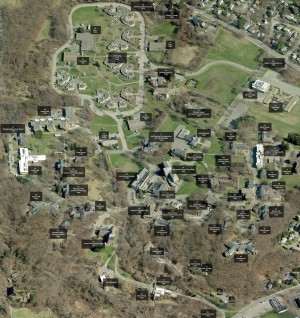
A labeled map using aerial photography composites for the recordation team.
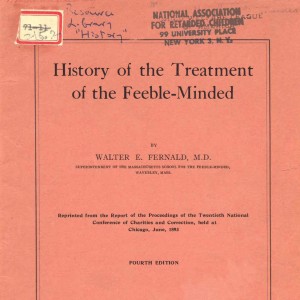
History of the Treatment of the Feeble-Minded, by Walter E. Fernald, 4th ed. 1912 (PDF).
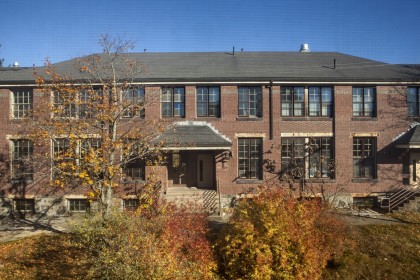
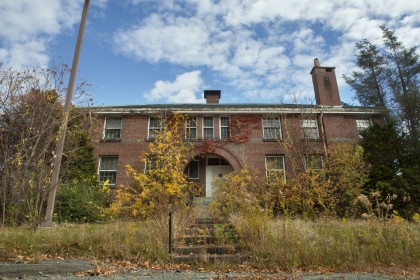
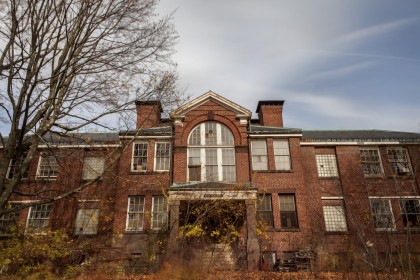
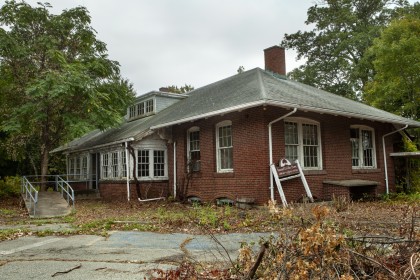
From late-19th-century dormitories to later institutional expansions, Fernald’s built landscape reflects changing ideas about disability, care, and control. Browse selected structures below, or open the full index to explore the complete campus record.
Landmark 1890 facility for severely disabled children, foundational to the Fernald's history.
Early school and gym building that anchored education, therapy, and worship before those functions shifted elsewhere.
First administration building and family residence, later reused for staff housing and records.
Early girls' dormitory with influential cross plan and used as a model for subsequent residential buildings.
Industrial training facility where residents learned trades and produced goods used across the Fernald's and nearby state institutions.
Queen Anne nurses' residence built for expanding staff, retaining notable interior features from the Fernald's early growth period.
Early Queen Anne dormitory that evolved from boys' housing into mixed institutional offices and support services.
Staff recreation building later expanded with medical services and a nationally significant developmental-disability library.
Personal histories and community contributions will be featured here as this section grows.
Read the new advocacy page for CORE 4 context, preservation priorities, and practical stabilization steps for vulnerable buildings.
Press highlights and external coverage are being curated. Check back soon for featured reporting and references.
Key dates in the Fernald Center story—from founding and expansion through closure, legal reforms, and continuing archival access milestones.
Samuel Gridley Howe starts the "Experimental School for Teaching and Training Idiotic Children" in Boston.
State funding supports land purchase in Waltham and creation of the first enduring campus footprint for Howe's school.
The West Building (originally the "Asylum") anchors the Waltham campus and marks the start of large-scale institutional care on site. Dr. Walter E. Fernald is appointed superintendent of the new facility.
The Massachusetts School for the Feeble-Minded is renamed the Walter E. Fernald State School.
Fernald residents are used in nutritional studies involving radioactive tracers, which later become a major ethical and legal flashpoint.
The Fernald League is established, and the Greene Unit opens as the largest building on campus, providing services for those living with blindness.
City historical reporting places the resident population at roughly 2,600 during the decade.
The Eunice Kennedy Shriver Center period marks a major expansion of campus evaluation, rehabilitation, and disability-focused program work.
Parents, guardians, and advocates sue the Commonwealth in 1972; a Fernald-specific class action follows in 1974, beginning decades of court-ordered reform.
After years of consent-decree oversight, the federal court issues a comprehensive disengagement order replacing prior decrees while retaining core resident protections.
A court-approved class settlement establishes a $1.85 million fund related to the radiation-study claims.
The Fernald Developmental Center closes on November 13, 2014.
The Fernald Recordation Team is commissioned by the city of Waltham to document the existing conditions of the institution.
State policy opens access to archived institutional records under 75-year and 50-years-after-death thresholds, with privacy protections for living individuals.